
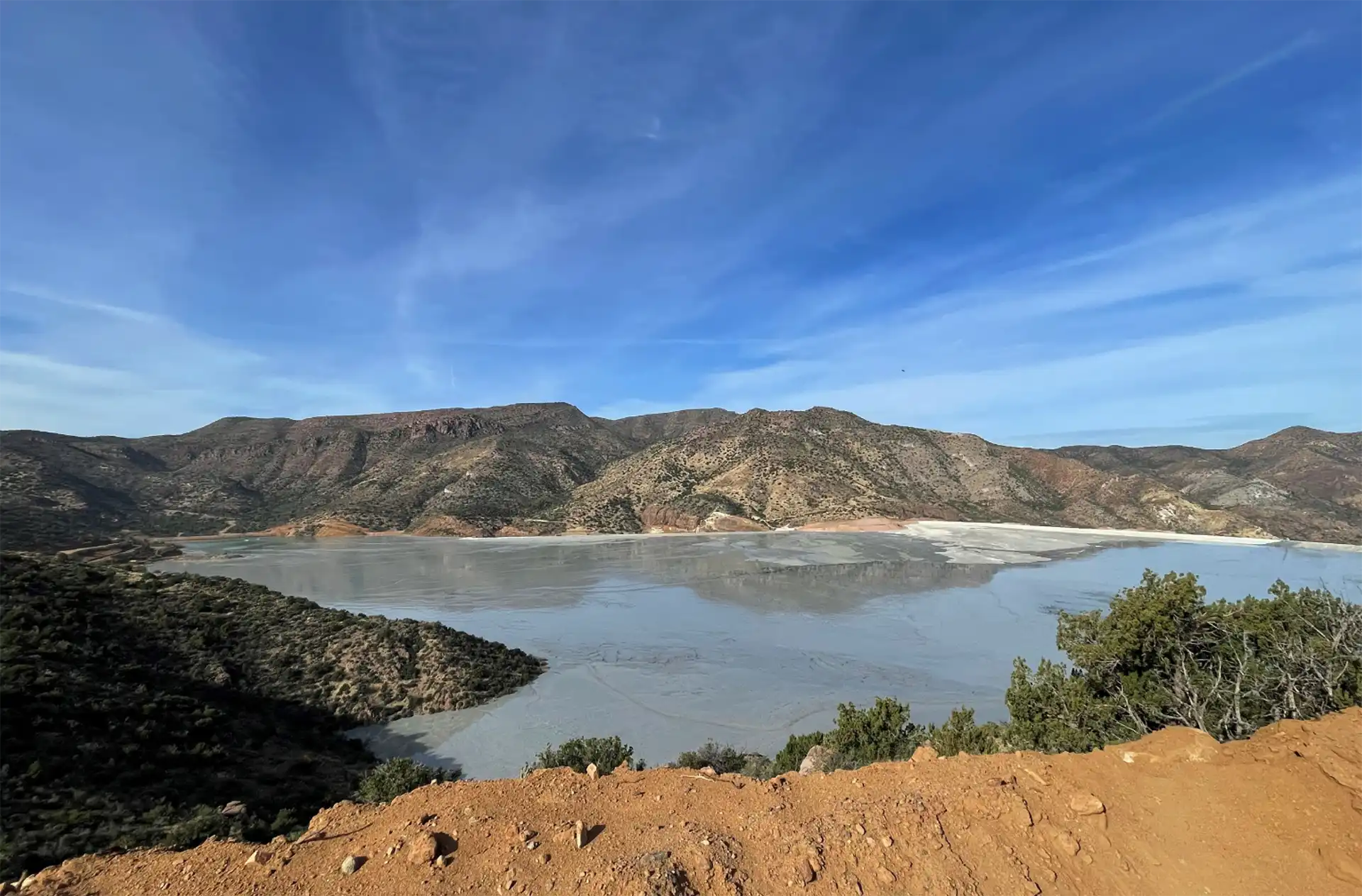
Capstone Copper (TSX: CS; ASX: CSC) is committed to modernizing its Pinto Valley open-pit operation in Arizona to lift production and potentially lengthen mine life, CEO Cashel Meagher says.
Located in the Globe-Miami mining district, about 130 km east of Phoenix, Pinto Valley is responsible for about one-quarter of Capstone’s copper output. Its second-quarter cash costs of $4.17 per lb. were the highest of the company’s four operations – representing more than four times those of Chile’s Mantoverde facility, Capstone’s top producing mine.
Capstone’s heightened focus on its Chile operations, which Meagher calls “our crown jewel,” doesn’t mean the Vancouver-based company has given up on Arizona. Starting this month, workers will be rebuilding Pinto Valley’s primary crusher and copper filtration plant. The planned shutdown “is expected to support improved performance thereafter,” Capstone says.
“Pinto Valley offers a tremendous amount of opportunity,” Meagher, a former Inco and Hudbay Minerals (TSX, NYSE: HBM) executive, told The Northern Miner in an interview last month.
“It’s an asset that was built in the early 70s, went through periods of austerity and didn’t necessarily have over the last 10 to 15 years the sustaining capex required to maintain steady production. We’ve embarked on what we’d call an asset management framework to be able to improve the reliability of the plant, such that we can produce the copper at its design nameplate capacity.”
The upcoming work “will unlock a lot of the unplanned maintenance problems we were having with the asset,” added Meagher, who has run Capstone since May last year.
Weak point
While Pinto Valley was designed to process up to about 56,000 tonnes of ore a day, throughput in the last two years has declined to about 40,000 tonnes, Meagher said.
“There’s been this sort of performance decline because of failure of the old components and the interconnectivity of various things like slurry pipelines and electrical cables that are continuously being replaced and repaired.”
Copper’s recent price surge has created “a real opportunity” for Capstone to restore daily throughput to its original level, the CEO stressed. As press time neared, spot copper was trading at $6.58 per lb., about 47% higher than a year ago.
An expanded mine “would be a very important cash contributor in the portfolio,” Meagher said.
Copper production at Pinto Valley dropped less than 1% year-over-year to just over 10,000 tonnes in the second quarter as unplanned maintenance cut plant throughput and recoveries. Mantoverde and Mantos Blancos, the company’s second Chilean mine, accounted for almost two-thirds of Capstone’s sulphides output during the period.
Pinto Valley “remained a weak point in the second quarter,” TD Securities mining analyst Craig Hutchison said in a note last month.
Ex-BHP asset
Since operations began in 1972, Pinto Valley has produced more than 4 billion lb. copper, including 500 million lb. of copper cathode. Capstone acquired the mine from BHP (ASX, LSE, NYSE: BHP) in October 2013.
In the longer term, technical studies are under way “to evaluate if there is a novel way without major capital costs to get [throughput] to maybe 70,000 tonnes a day,” Meagher said. “That would be like step two after these next few years.”
Pinto Valley holds about 1.4 billion measured and indicated tonnes grading 0.29% copper for contained metal of 8.93 billion lb. copper, according to a March 2021 resource. Inferred resources were pegged at 170.6 million tonnes grading 0.26% copper for contained metal of 967.6 million pounds.
Capstone says it’s looking at ways to include a portion of the 1 billion tonnes of resources into the mine plan, which could prolong operations until 2050. For now, Pinto Valley is fully permitted to operate until 2039.
“If we permit a new tailings dam and we come up with some improvements there, we can easily see this asset going into the 2050s,” Meagher said.
“Keep in mind that there’s still a billion tonnes of resource there. The trend in copper is it’s harder to get and harder to find, so really year over year Pinto Valley will become more and more valuable.”
District consolidation
Opportunities also exist to acquire nearby land outright or sign joint ventures to access additional mine feed, Meagher said. He declined to name potential partners, saying only that negotiations are under way.
Neighbouring properties include BHP’s Copper Cities site, Freeport-McMoRan’s (NYSE: FCX) Miami mine and KHGM’s Carlota operation.
“We believe we have some runway for some district consolidation,” Meagher said. “We’re going to work with our neighbors around what we believe are sterilized, isolated deposits within the Globe-Miami area that don’t merit their own infrastructure but might benefit Pinto Valley by offering some higher-grade feed. There are several players with several different deposits around there, and we’re working with them to determine what might work.”
“It’s not something we see in our immediate future, but it’s something we’re working towards.”
US copper
The Trump Administration’s push to accelerate U.S. mining projects and boost critical metals production to cut reliance on Chinese imports can only benefit a facility such as Pinto Valley, Meagher added.
“Obviously, what’s in vogue these days is U.S. copper. We produce U.S. copper and we see an avenue forward that Pinto Valley can be a very serious producer for a very long time,” he said.
“So, while Chile is our crown jewel, there’s a lot of work going on to polish up Pinto Valley. What we say internally is that we see light at the end of the tunnel. We see the way out for Pinto Valley to be a reliable producer.”
Be the first to comment on "SW US CEO chat: Capstone devoted to Arizona mine for long haul "